

Collect Art Fair and the Expanding Language of Contemporary Craft

Oriel Zinaburg, installation view, 2022. Works made of stoneware, glaze and oxides. Photo courtesy of the artist
At Collect Art Fair contemporary craft is no longer a category that sits neatly apart from art or design. It moves between them. The most compelling works are not simply handmade objects or beautifully resolved pieces of furniture, but propositions: explorations of material, memory, surface, landscape and form. Across the fair, ceramics swell into sculpture, marquetry becomes painterly, and textile works operate somewhere between installation, ornament and architecture. Collect’s wider emphasis on collectible design makes that shift even clearer, positioning furniture, lighting and objects within the same cultural conversation as museum-quality craft.
What feels especially striking is the way material itself becomes the narrative. The fair foregrounds artists and designers who work not only with traditional media such as ceramics, wood, textiles and metal, but also with reclaimed, historic or unconventional matter, from bog wood and botanical waste to paper, denim, shopping bags and moss. Rather than novelty, the effect is one of depth: a reminder that materials carry time, ecology and cultural memory within them.
That sensibility is powerfully present in Oriel Zinaburg’s ceramic sculptures, which feel at once bodily, geological and faintly architectural. Their stacked, swollen forms resist the neatness often associated with domestic ceramics, instead suggesting accretion, erosion and strange organic growth. Zinaburg’s Collect Open presentation extends this further through ceramic tiles and structural elements, exploring how clay might move beyond the vessel and into spatial storytelling. It is a compelling example of how ceramics are being rethought not as decorative object alone, but as a language for structure, atmosphere and narrative.

Kamilah Ahmed, Midnight Orchid, 2021, Silk yarns on cotton, 90 x 160 x 1.5 cm. Photo: Matt Hass
A similar expansion happens in the marquetry works featured here, where wood becomes less a surface finish than a medium of image-making. Olly Fathers’ practice, developed through veneer and ancient bog wood, brings an almost meditative rhythm to pattern and composition. His work draws attention to the age of the material itself, wood formed over millennia, while using traditional marquetry to create something resolutely contemporary. In another register, the cabinet by Zofia Sobolewska Ursic shows how marquetry can become atmospheric and decorative in the best sense: not ornament as embellishment, but ornament as structure, image and emotion. In both cases, wood is treated with the intimacy of painting and the discipline of design.
Textiles, too, appear throughout this year’s presentations as some of the fair’s most immersive and spatial works. Kamilah Ahmed’s suspended embroidered installation draws on heritage techniques including Jamdani weaving and Ari hook embroidery, translating cityscape, memory and cultural inheritance into a layered textile environment. Elsewhere across the fair, fibre practices move fluidly between wall work, sculpture and interior intervention, reinforcing how textile has become one of the most expansive fields within contemporary design culture.
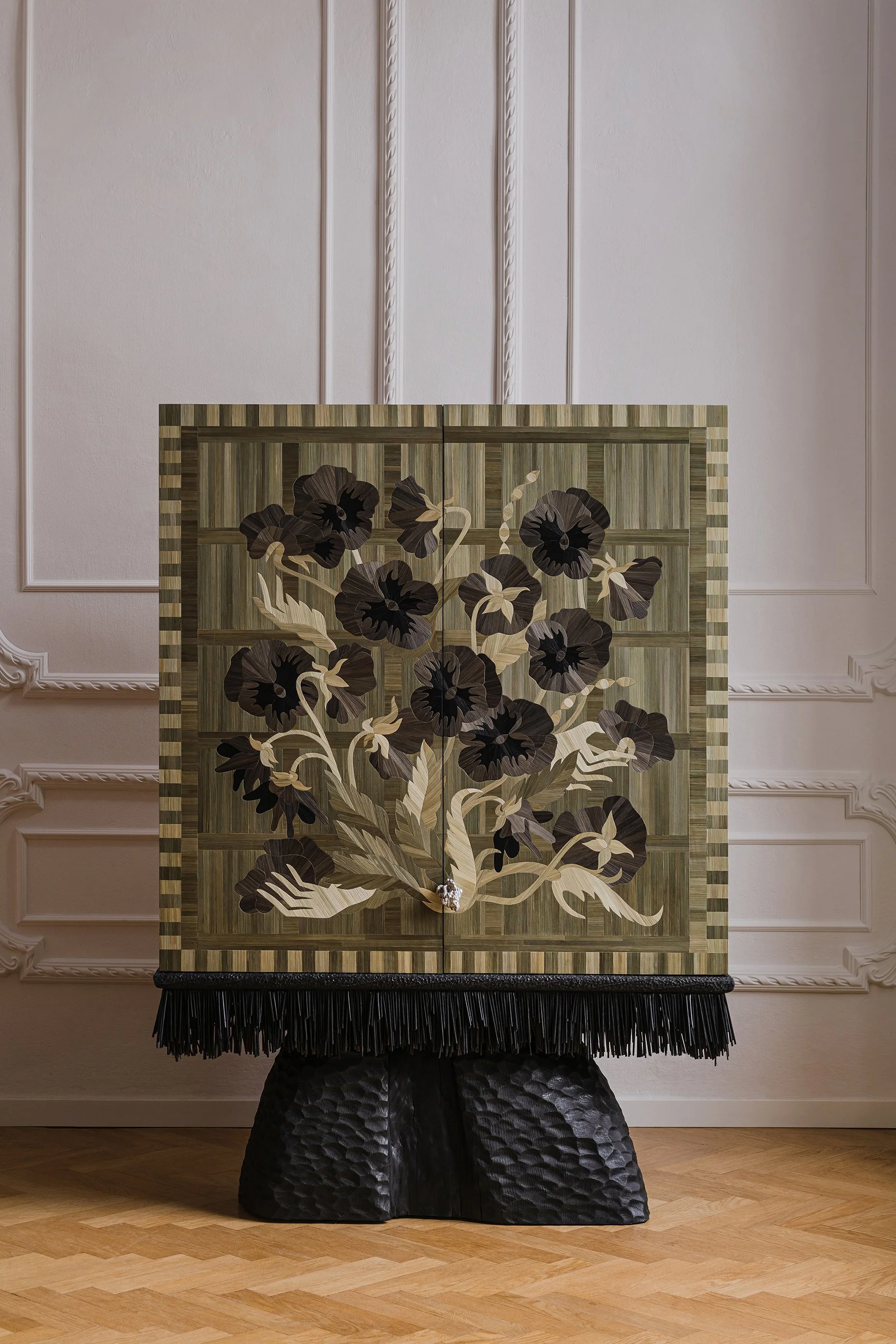
Zofia Sobolewska Ursic, Cabinet La nature est un Temple, 2025. Straw, straw marquetry, wood, aluminium. 153 x 104 x 42 cm. Photo: Mood Authors
That blurring of boundaries is central to the fair’s strongest design presentations. Collect explicitly places collectible design alongside contemporary craft, arguing for a shared territory shaped by tactility, experimentation and narrative presence. The result is furniture that feels sculptural rather than merely functional, and surfaces that read as artistic compositions in their own right. Jig Studio’s presentation of Brazilian design speaks directly to this mood, foregrounding works shaped by material experimentation and a strong sense of living design culture rather than static typology. Across the fair more broadly, furniture and lighting are treated with the same curatorial seriousness as ceramics or textile works, which gives the entire event a more expansive visual language.
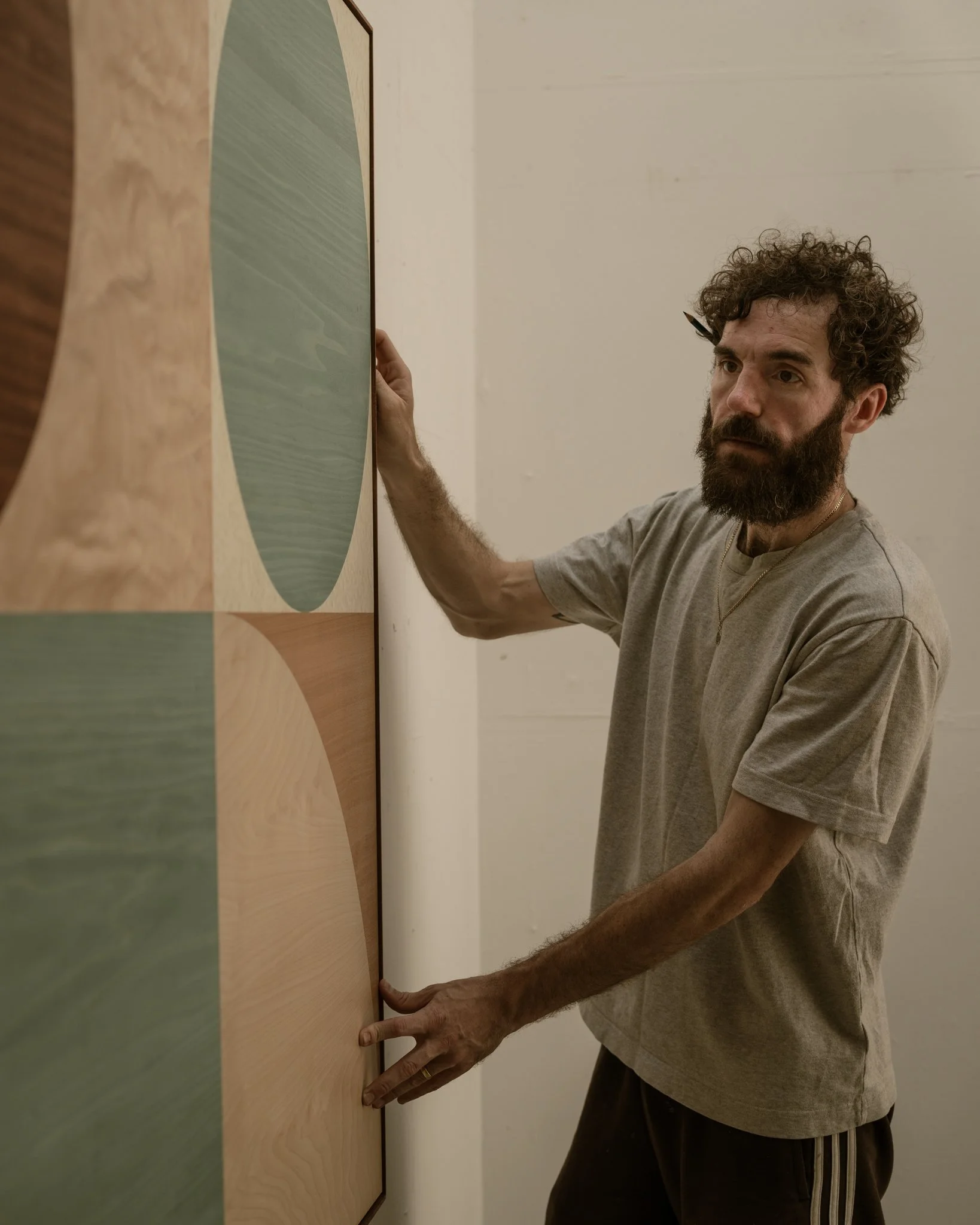
Olly Fathers. Photo: Justyna Kulam
What makes Collect interesting from an interiors perspective is that so many of these works feel capable of transforming a room without losing their conceptual charge. A marquetry cabinet can hold the visual weight of a painting. A ceramic form can function like sculpture. A woven or embroidered piece can soften architecture while also intensifying it. Even when the works are highly collectible, they are rarely aloof. They seem to ask how we want to live with objects now: what kinds of forms deserve permanence, what kinds of surfaces can still surprise us, and how craftsmanship can shape not only objects but entire atmospheres.

Ronald Sasson, BYA N.10, 2025. Photo: Ale Ruaro, Courtesy of Jig Studio.
Collect Open sharpens that proposition further. Its installations emphasise works that challenge material, personal and social perceptions, and that ambition is visible in the artists featured here: craft is not presented as nostalgia, but as an active, evolving discipline capable of holding biography, politics, heritage and experimentation at once. That sense of movement, between art and use, between tradition and reinvention, between the collectible and the lived-with, is what makes the fair feel so relevant now.
Perhaps that is the clearest takeaway from these works. They suggest a future in which design is less about slick perfection and more about texture, story and material intelligence. Not objects that simply decorate a space, but objects that alter the way a space feels, and the way we look at it.
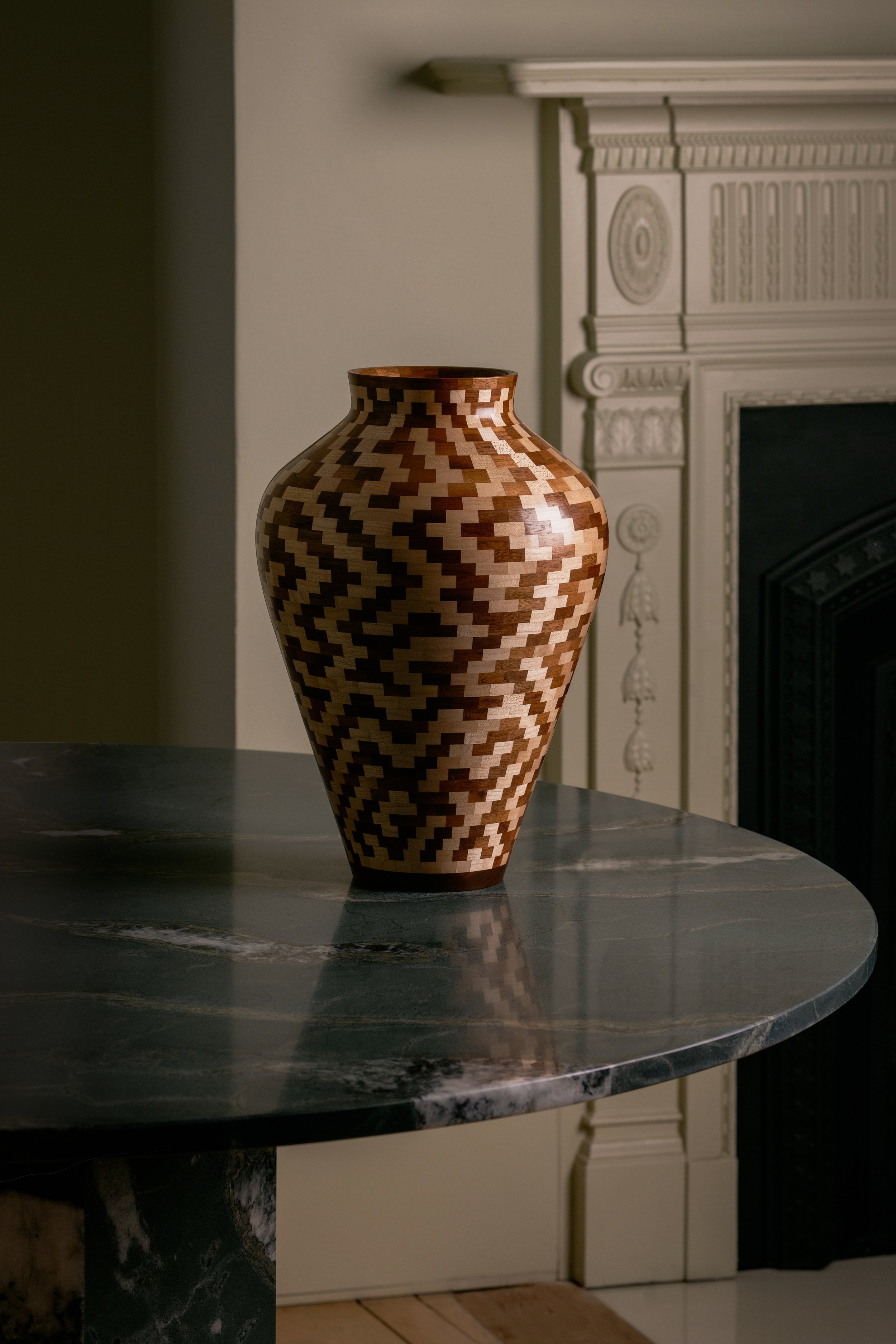
Sean Evelegh, Celtic Vase, 2020. Presented by the Society of Designer Craftsmen at Collect 2026. Photography: Tian Khee Siong